- Location: Kelowna, BC
- Items: Two armchairs and a two-seater loveseat
- Condition: Heavy soiling on armrests and headrests; general soiling throughout
- Equipment: Steam E600 Ninja extractor, rotary agitation tool, professional air movers
- Result: All three pieces fully cleaned and protected in a single visit.
Where the wear shows up first
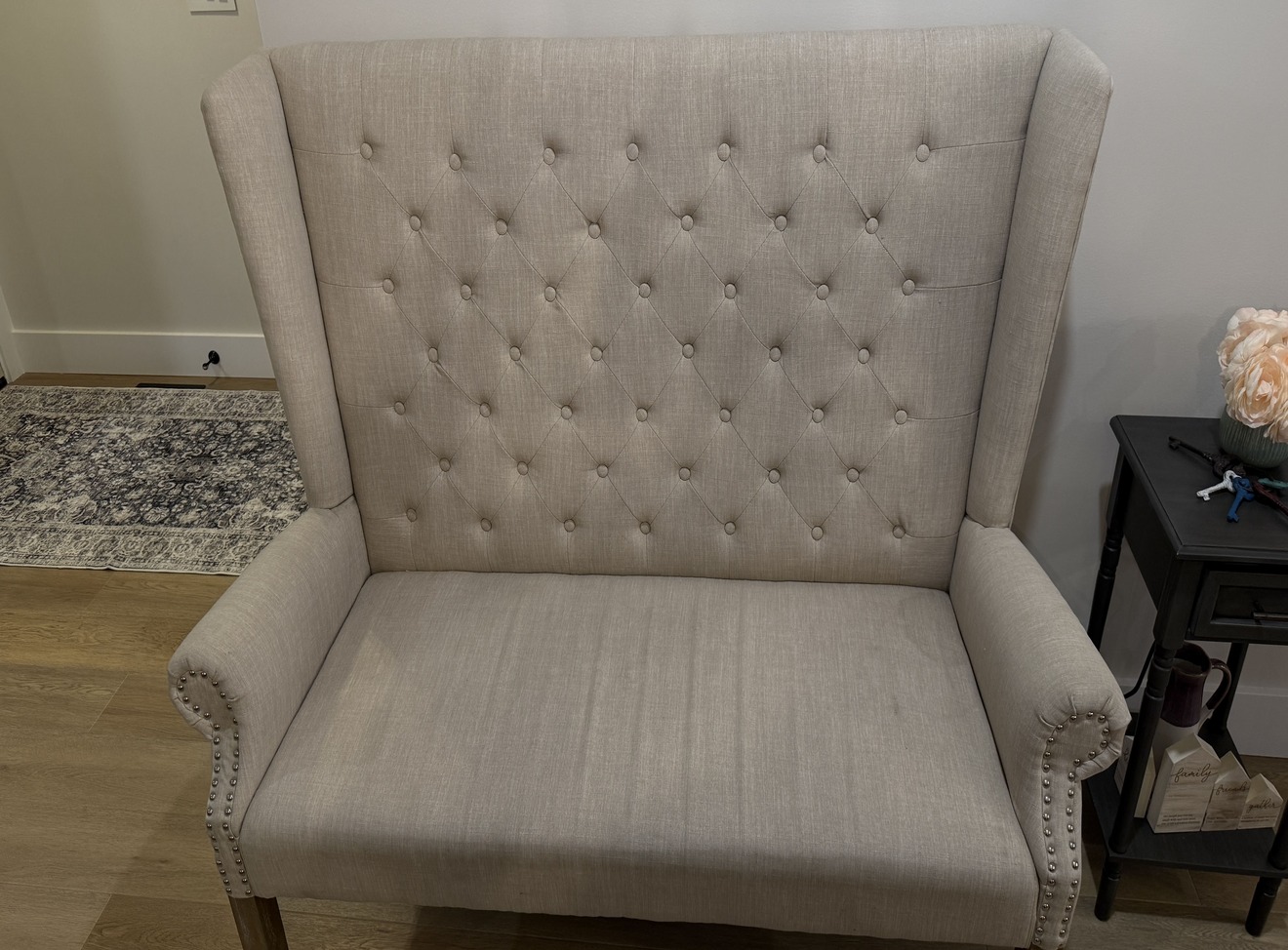
Photo: Loveseat before cleaning – seat fabric noticeably darker and heavier than the backrest, consistent with accumulated soiling from regular use.
This was a three-piece upholstery job at a Kelowna home – two armchairs and a loveseat. The overall fabric wasn’t in bad shape, but the contact zones were. The armrests and headrests on all three pieces had taken on that particular kind of soiling that builds up from regular skin contact: a compacted, greasy layer that looks darker than the surrounding fabric and doesn’t respond to surface cleaning.
That pattern is consistent across almost every upholstered piece we work on. Armrests and headrests take disproportionate wear because the contact is direct, repeated, and over a concentrated area. Body oils transfer into the fibre with every use, and over time they attract and hold other airborne debris. The rest of the fabric was tired from general use, but those zones were the real problem.
The client also wanted Scotchgard protection applied after the clean. That’s a reasonable thing to ask for on upholstery that’s had a thorough professional clean – but the order of operations matters, and we’ll come back to that.
Our process
Breaking down the contact zone soiling
Before the extractor came out, we applied pre-spray across the full surface of all three pieces, concentrating on the armrests and headrests where the soiling was densest. Pre-spray on upholstery works by loosening the bond between the embedded material – oils, grime, compacted debris – and the fabric fibre itself. On its own, that’s useful. But on heavily soiled contact zones, the chemistry benefits from some help getting into the weave.
For that, we used a rotary agitation tool – a soft rotating brush that works the pre-spray down into the fibre rather than letting it sit on the surface. On armrests and headrests with that greasy, layered kind of soiling, agitation is the step that separates a proper clean from a surface pass. The rotation lifts the pile, opens up the weave, and gives the pre-spray access to the material that’s been packed down by repeated contact. We let the chemistry dwell for several minutes before moving to extraction.
Extraction
We used the Steam E600 Ninja for all three pieces, operating at 120 to 150 PSI. That pressure range is deliberate for upholstery work. High enough to flush the loosened material out of the fibres cleanly – low enough to avoid pushing moisture into the foam and batting underneath. Overwetting upholstery is a straightforward way to create a slow-drying interior that develops odour, and it’s avoidable with the right settings.
We ran a full extraction pass over each piece, working the armrests and headrests with additional attention given how much the pre-spray and agitation had drawn up from the fibre. The recovered water from those zones came back visibly darker – which is a useful indicator of what had been sitting in the fabric.
Scotchgard – timing is everything
Once the pieces were extracted and the drying fans were set up, we let everything come fully dry before applying the Scotchgard.
This is the part worth understanding if you’re considering a fabric protection treatment. Scotchgard works by coating the individual fibres with a protective layer that resists moisture and slows the penetration of new soiling. Applied to clean, dry fibre, it does that job well. Applied before a proper clean – or before the fabric is fully dry – it seals whatever is currently in the weave. On a piece that’s been in regular use, that means locking in oils and debris rather than protecting against future ones.
The sequence is non-negotiable: clean first, dry completely, then protect. We applied the Scotchgard once we were satisfied all three pieces were dry through to the backing.
The result
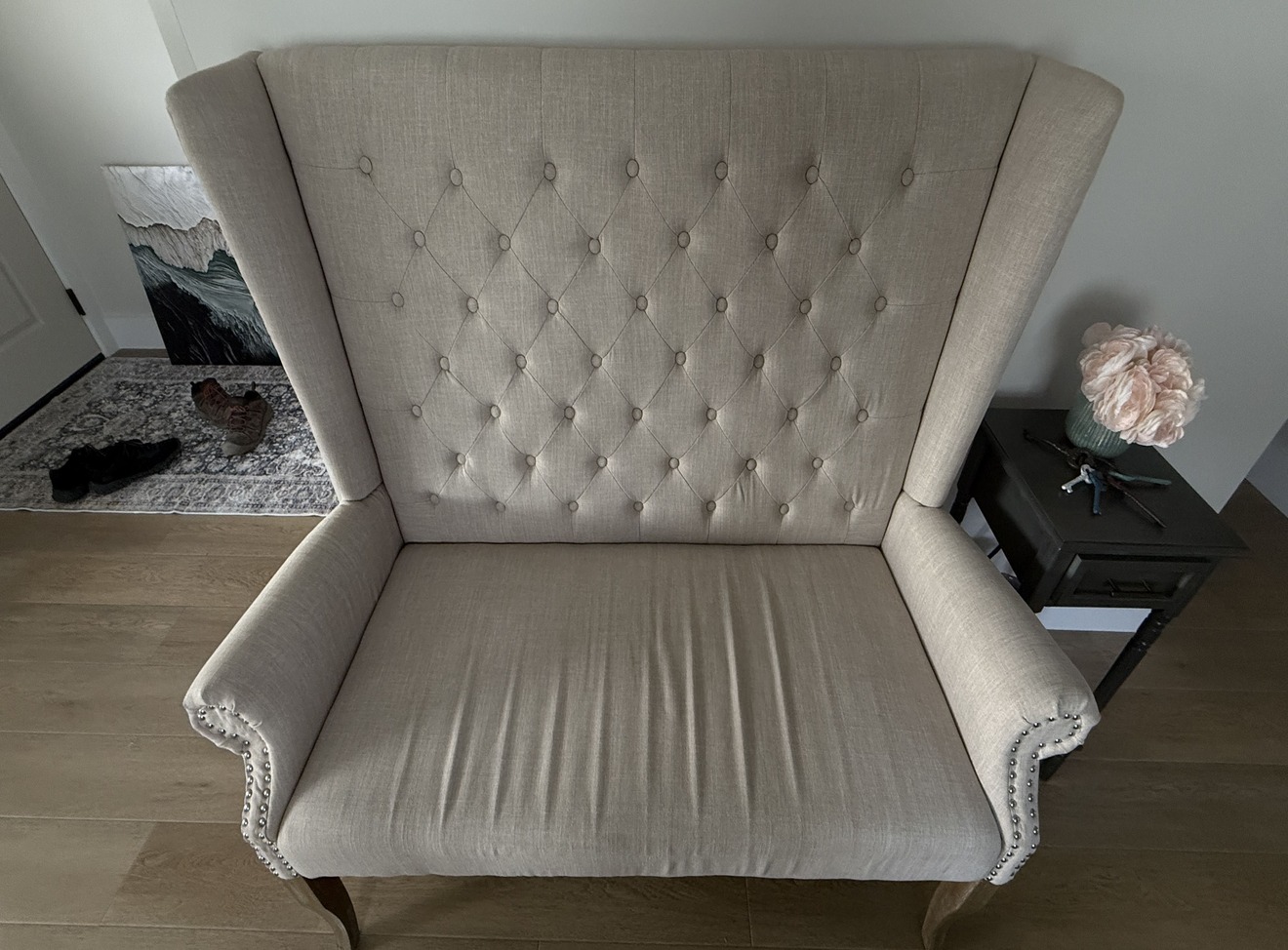
Photo: Loveseat after cleaning – consistent colour throughout, fabric bright and even from seat to backrest.
All three pieces finished clean and evenly coloured throughout. The armrests and headrests came back to match the surrounding fabric – no residual darkening, no greasy patches. The Scotchgard was applied evenly across all surfaces and allowed to cure before the furniture went back into use.
One visit, done.
What fabric protection actually does – and when it makes sense
Scotchgard and similar protector treatments get talked about as though they make furniture impervious to soiling. They don’t. What they do is slow the process down – they reduce how quickly new contaminants penetrate the fibre, which extends the interval before the fabric needs professional attention again.
On pieces that see regular use, that’s genuinely useful. Armrests in particular resoil faster than any other zone on a sofa or chair, and a protective coating on clean fibre means those oils and contact residues take longer to work their way in. You still need to clean eventually – but the cleaning interval gets longer, and the job is less involved when you do.
The other thing worth knowing: a protection treatment applied to fabric that hasn’t been properly cleaned first is money not well spent. The coating goes on over whatever is already in the fibre. If you’re going to protect your upholstery, do it right after a professional clean while the fibres are as clean as they’re going to be. That’s when the treatment has the best possible surface to work with.
Upholstery cleaning in Kelowna
BreezeCo handles sofa, armchair, and upholstery cleaning throughout Kelowna and the surrounding area. Fabric protection treatments are available as part of any upholstery clean. We’ll tell you straight what to expect before we arrive.