- Location: Kelowna, BC
- Items: Five-seater sofa with chaise (feather-filled cushions), B-frame seat with natural fabric upholstery, viscose rug
- Condition: General soiling throughout all pieces
- Equipment: Steam E500 Ninja, Steam E600 Ninja, professional air movers
- Result: All pieces fully cleaned and dry in a single visit, with no damage to any material
What we walked into
Most jobs have one tricky item. This one had three, and they shared the same core problem: none of them could handle much water.
The main piece was a five-seater sofa with chaise. Natural fabric upholstery, which asks for controlled moisture and careful pressure during extraction. The cushions were feather-filled – which changes the job considerably, because loose fill like down absorbs water readily and holds it for a long time. Saturate a feather cushion during cleaning and you’re looking at a drying problem that can turn into an odour problem. The B-frame seat alongside it had a similar natural upholstery, which carried its own set of handling requirements.
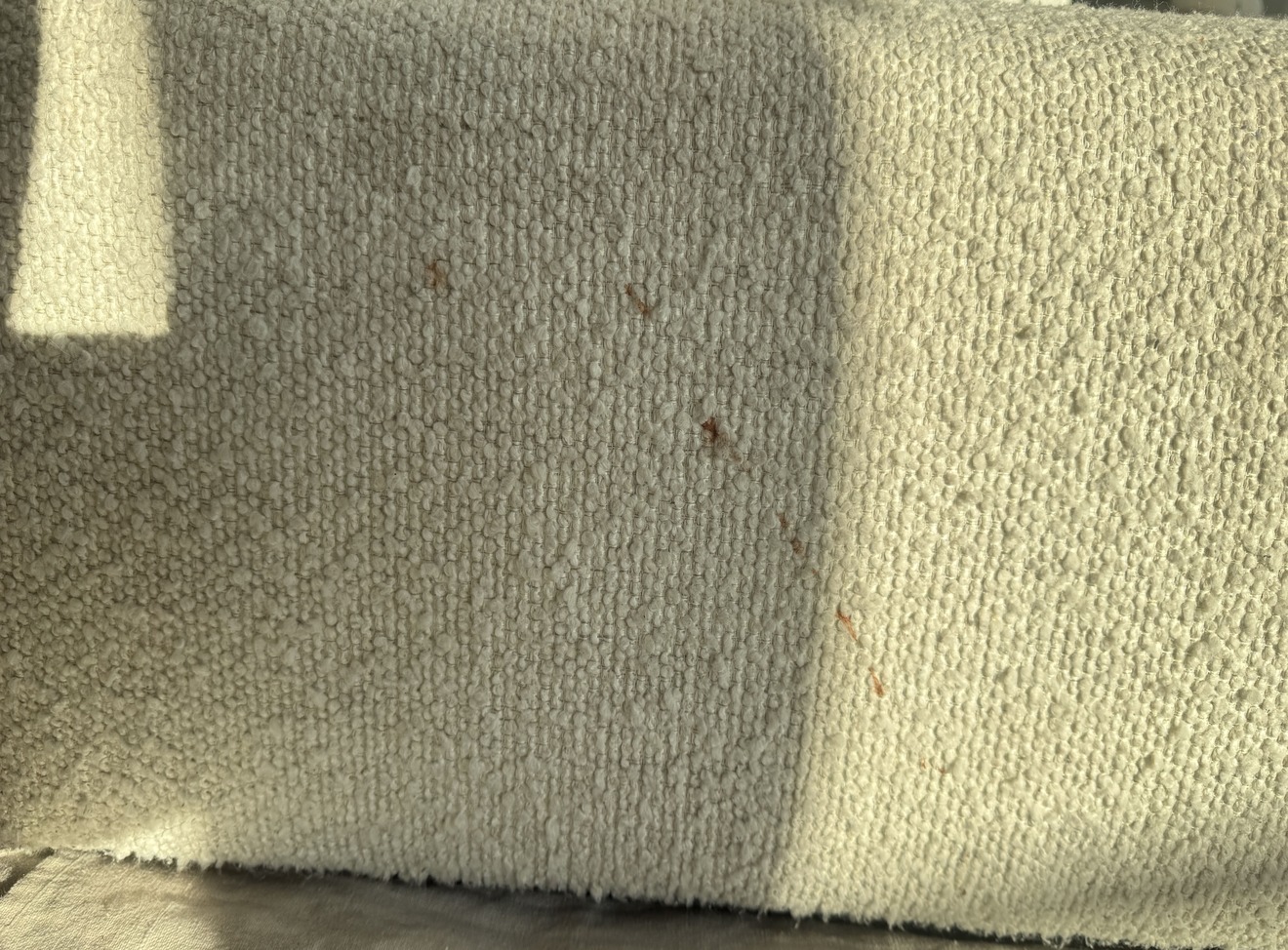
Photo: Sofa cushion prior to cleaning – scattered organic staining across cream bouclé fabric.
Then there was the viscose rug.
Viscose is the material that tests whether a cleaner actually knows what they’re working with. It’s derived from plant cellulose and processed into a soft, silky fibre that looks and feels expensive – because it is. It also reacts to moisture more dramatically than almost any other floor covering material. Too much water in the pile causes the fibres to expand unevenly, which can lead to browning, shrinkage, and a distorted texture that doesn’t recover. You cannot clean a viscose rug the same way you’d clean a synthetic, and you cannot rush the drying.
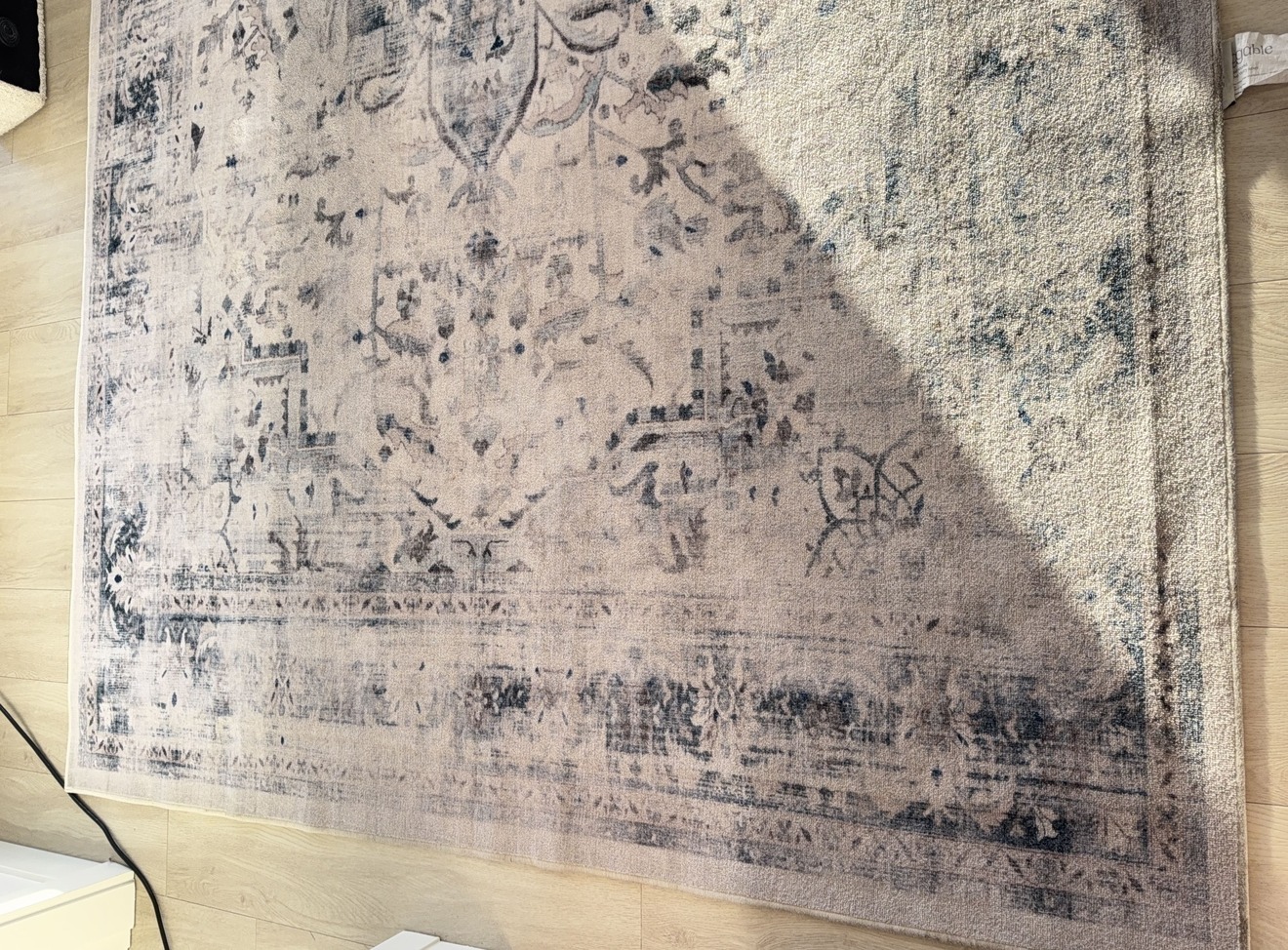
Photo: Viscose rug prior to cleaning – general soiling has flattened and dulled the surface across the full field.
On this job, every item had its own specific limits. Getting the clean right meant working within all of them at once.
Our process
Reading the sofa before touching it
Before the machines came out, we assessed both upholstered pieces carefully. With natural fabric, the first question is always about the fill. Standard cushions – foam or fibre fill – behave predictably under controlled extraction. Feather and down are different. The fill compresses and shifts, the ticking that contains it isn’t designed to be wet repeatedly, and the drying window for feather-filled cushions is significantly longer than it is for anything else on a sofa.
Our approach to the feather cushions was to clean the fabric surface without introducing moisture into the fill. We applied a professional upholstery prespray to the cushion covers, let it dwell for fifteen minutes, and extracted with the Steam E600 Ninja at low pressure – working the extraction wand across the surface rather than dwelling in any single spot. The goal was to draw the loosened soil up from the fabric and into the extractor before the moisture had a chance to work its way through the cover and into the fill underneath. After extraction, we set air movers on the cushions immediately and monitored them through to the end of the job.
The B-frame received the same prespray and pressure settings as the sofa body. Natural fabric upholstery in general benefits from firm but not aggressive extraction – enough to flush the fibres cleanly, not so much that you’re pushing water into the frame and batting behind the fabric.
The viscose rug – minimum moisture, maximum dwell time
The rug required a different machine and a different mindset. With viscose, the chemistry does the work – the extractor’s role is to flush it out efficiently, not to compensate for inadequate dwell time by running more passes.
We applied a prespray suited to natural fibre materials and left it for a full fifteen minutes. This is non-negotiable with viscose. The fibres are delicate enough that you want the chemistry to do as much of the soil separation as possible before any mechanical action starts. Rushing dwell time means the extractor is doing more work, which means more moisture going into the pile, which is exactly what you’re trying to avoid.
We used the Steam E500 Ninja for the rug extraction, running at moderate pressure and working in slow, deliberate passes. The recovered water came back noticeably dark – a consistent reminder that viscose, with its soft, open fibre structure, holds onto embedded particulate in a way that isn’t obvious from the surface until you see what extraction pulls out.
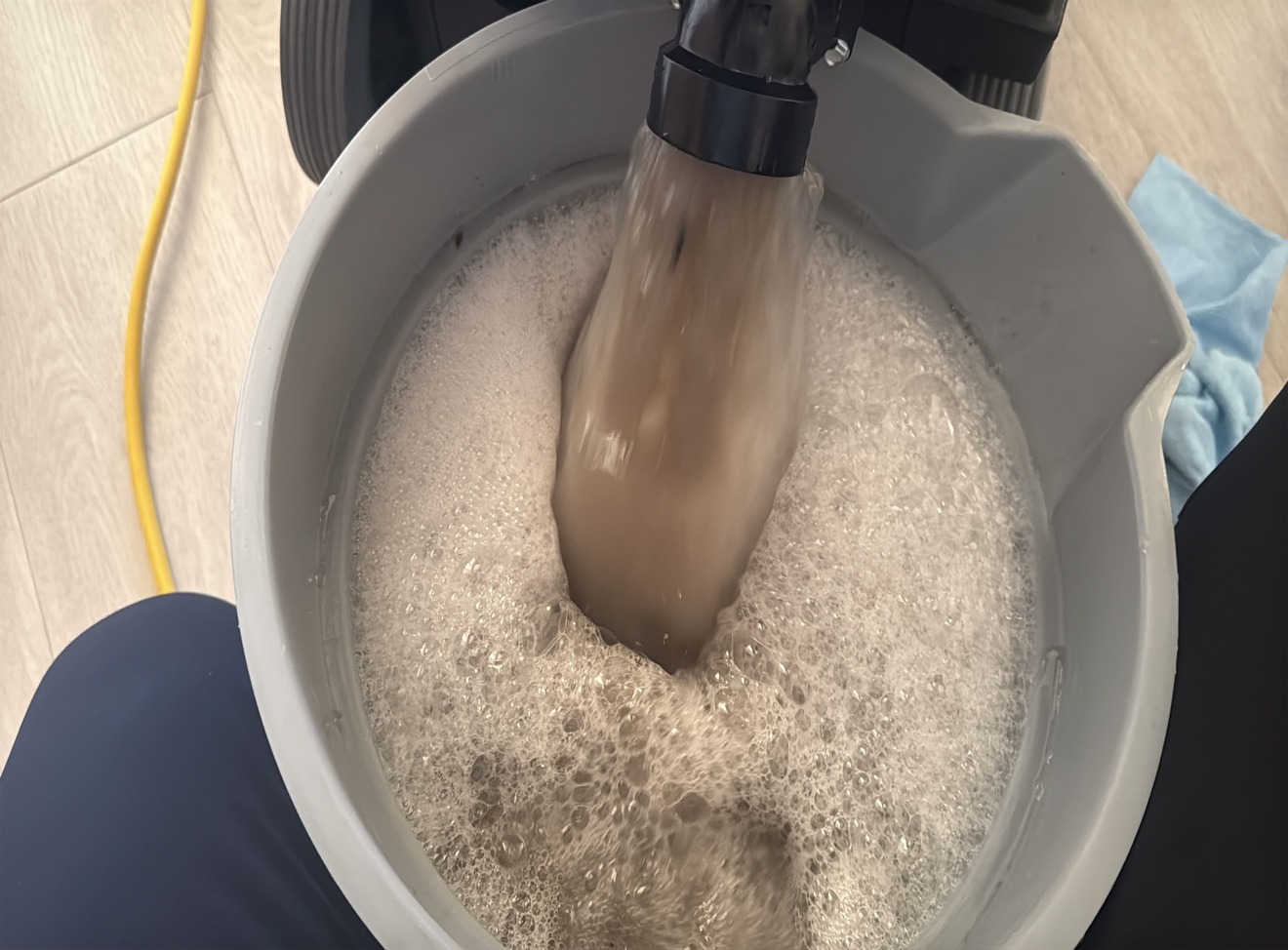
Photo: Extractor waste tank during rug cleaning – recovered water dark from embedded soil.
After extraction, we set air movers directly on the rug and kept them running until it was dry through to the backing. With viscose, surface-dry is not the same as actually dry. Residual moisture in the base of the pile is where browning comes from, and it can develop hours after you’ve left the property if the drying stage is cut short.
Sequencing the drying
On a job where every item has a drying requirement, how you sequence the air movers matters. We set up on the feather cushions and the rug simultaneously – the two items with the longest drying windows – and kept fans running across all surfaces while we completed the remaining extraction passes. By the time the last piece was extracted, the first pieces were already well into the drying cycle.
We don’t call a job complete when the surface feels dry. We stayed until the rug backing and the cushion covers were dry through, and assessed each piece before packing up.
The result
All three items finished clean and dry within the single visit. The sofa and chaise came out evenly coloured throughout, with no water marking and no sign of moisture in the cushions. The B-frame upholstery cleaned up consistently with the surrounding fabric. The viscose rug recovered its texture and colour properly – bright and even, with none of the browning or distortion that moisture mismanagement would have caused.
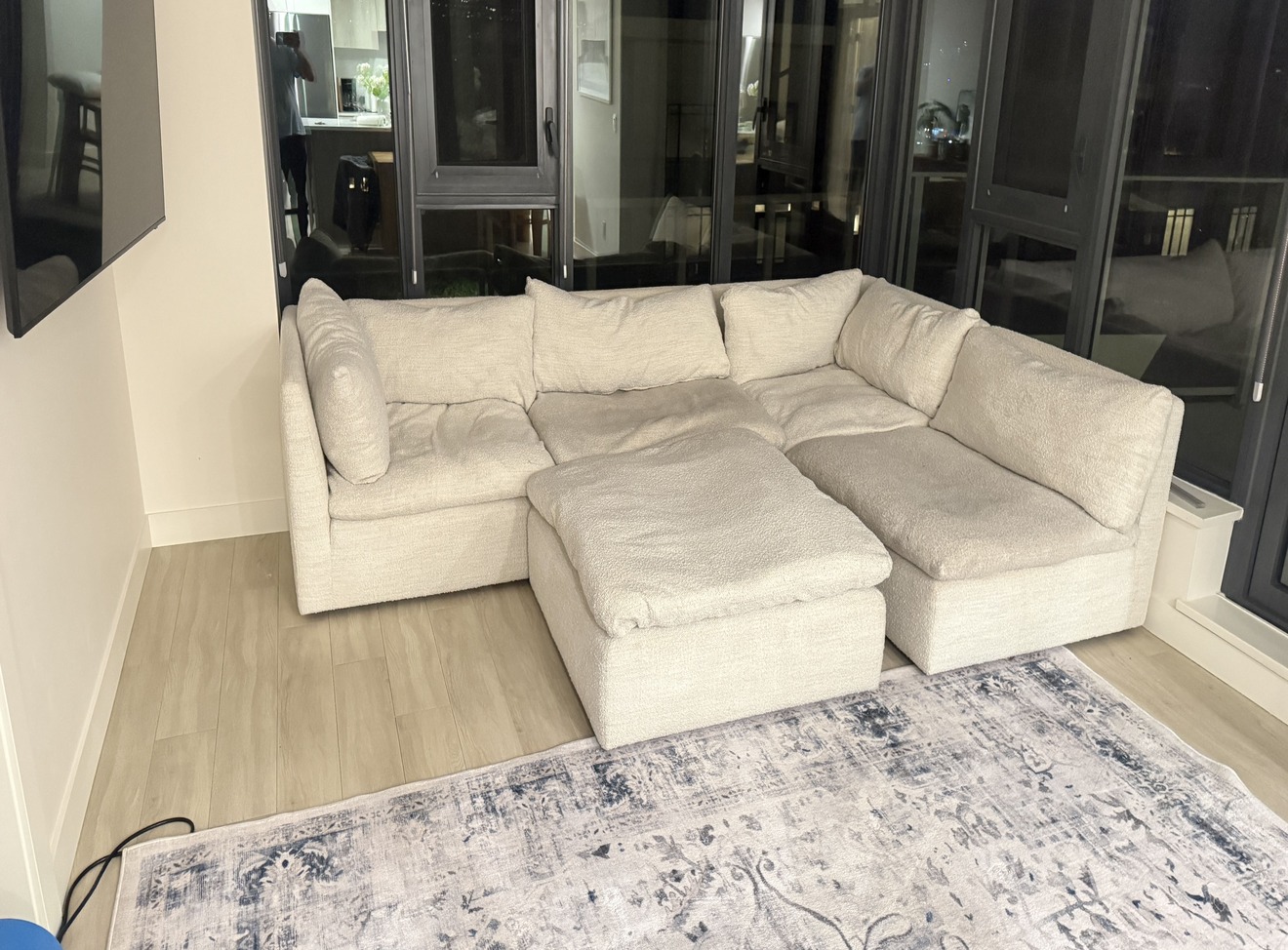
Photo: Sofa and chaise fully cleaned and dry – consistent, even colour throughout, no staining or water marks.
The honest takeaway on materials that don’t forgive moisture
Feather fill and viscose are two of the more common materials where a DIY cleaning attempt causes more damage than the original soiling – not because the person doing it was careless, but because the materials behave in ways that aren’t obvious until something goes wrong.
Viscose browning after a home clean is one of the most frequent calls we get following a DIY attempt. It typically happens when too much water goes in and drying is either too slow or uneven. By the time the browning appears, the fibre has already reacted, and reversing it requires additional treatment that wouldn’t have been needed otherwise.
Feather cushions are less commonly attempted at home, but when they are, the problem is usually residual moisture in the fill. It doesn’t always produce immediate odour – sometimes it takes days – but by the time it’s noticeable it’s working against you from the inside.
If you have either material and are thinking about cleaning it yourself, the most useful thing to know is this: the difficulty isn’t in getting the surface clean. It’s in managing the moisture so the material doesn’t react to the cleaning process itself. That’s a harder problem than it looks, and it’s worth getting right the first time.
Upholstery and rug cleaning in Kelowna
BreezeCo handles upholstery and rug cleaning throughout Kelowna and the surrounding area – natural fibres, viscose, feather-filled pieces, and everything in between. We’ll assess what you have and tell you straight what the job involves before we start.
See our upholstery and sofa cleaning services →