
- Location: Kelowna, BC
- Item: Fabric sofa
- Stain type: Soup spill – organic contamination
- Equipment: Steam E600 Ninja extractor
- Result: Stain fully removed. No residue, no odour.
The stain and what it meant
Soup sounds straightforward. It isn’t.
Food-based spills – especially anything with protein, fat, or starch – don’t just sit on the surface of upholstery fabric. They soak into the weave quickly, and once they’re in the fibres, the biology of the contamination starts working on its own. The organic material begins to break down. Left long enough, that process produces odour and can leave a residue that ordinary cleaning chemistry won’t fully address.
The challenge with this job wasn’t just getting the visible stain out. It was making sure the organic content inside the fibres was neutralised completely – not masked, not partially lifted, but actually broken down. If you skip that step and go straight to extraction, you can clean the surface and still leave the source of future odour behind.
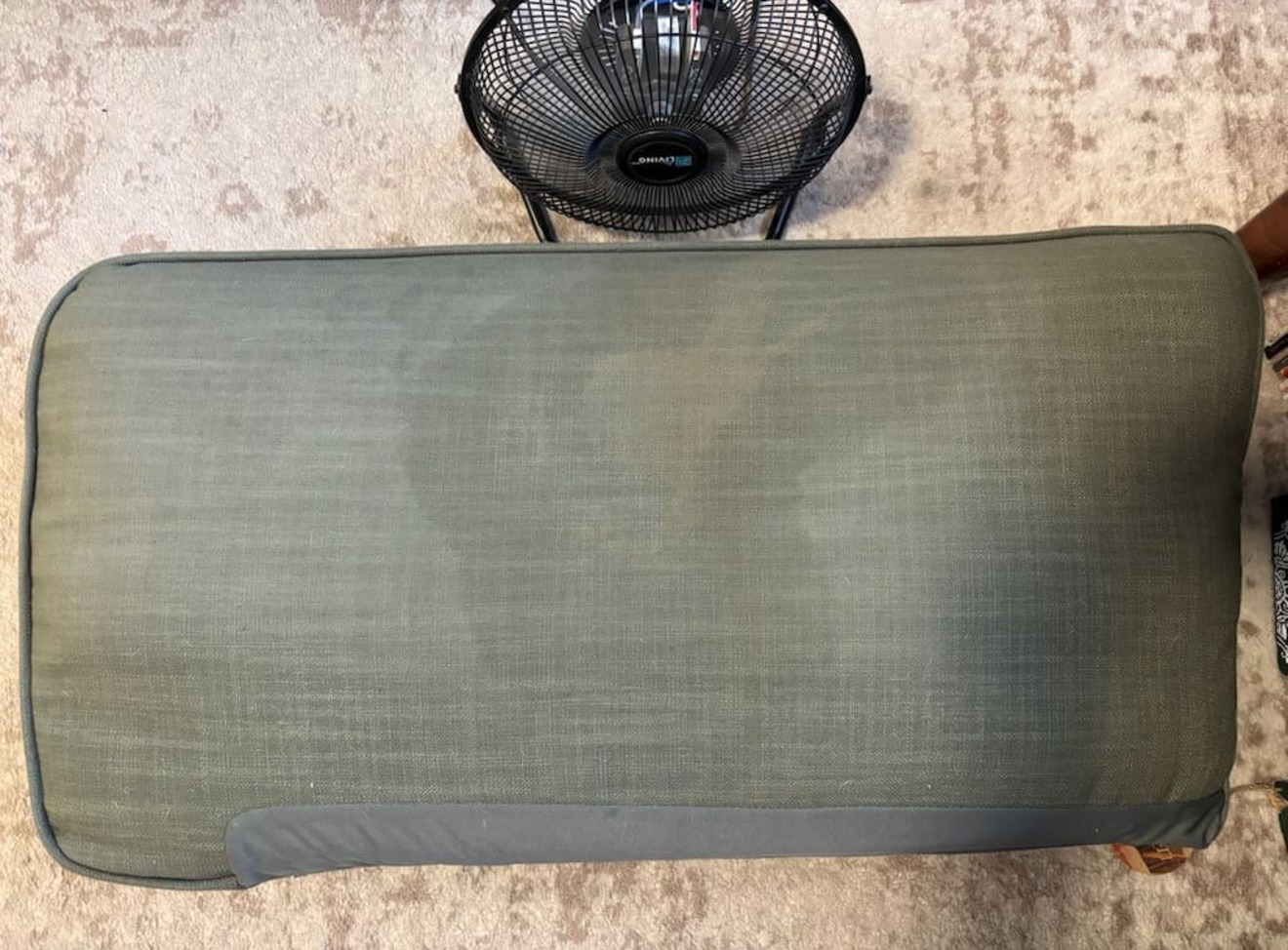
Photo: Sofa mid-process – stain visible on the seat cushion, air mover set up for drying.
Treating the biology before cleaning the fabric
With organic stains, the sequence matters more than the equipment.
The first thing we applied was Biozyme – an enzymatic prespray designed specifically for biological contamination. Biozyme works by introducing enzymes that break down the organic compounds inside the stain: proteins, fats, starches. We applied it directly to the affected area and left it to dwell for twenty minutes. That dwell time is not optional. The chemistry needs time to penetrate the weave and do its work at the fibre level. Cutting it short means you’re extracting before the biology has been addressed.
After the Biozyme had run its course, we applied a second layer – a general fabric prespray to prepare the broader surface for extraction. This one dwelled for fifteen minutes. Two-stage prespray on an organic stain isn’t doubling up for the sake of it: the first stage neutralises the contamination, and the second stage addresses the fabric itself. They’re doing different jobs.
Extraction
Once both presprays had fully dwelled, we extracted with the Steam E600 Ninja. Upholstery runs at lower pressure than rug work – we operated at around 120 PSI, which is enough to flush the loosened material out of the fibres without saturating the foam and padding underneath. Overwetting upholstery is its own problem: moisture that gets into the interior layers dries slowly, and slow drying in padding creates conditions for odour and mould.
The extraction came out clean. No residual staining in the fabric, no chemistry left behind.
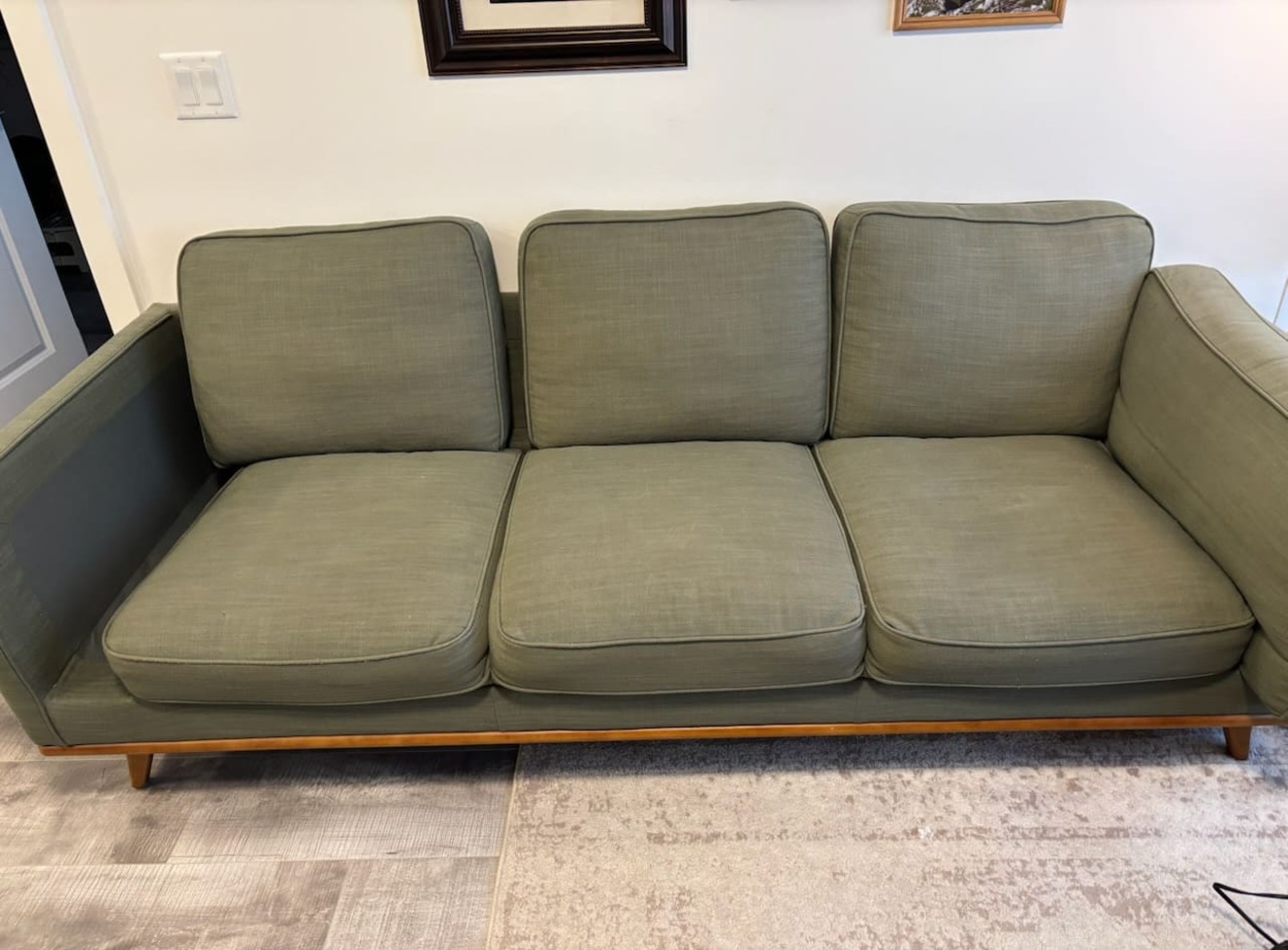
Photo: Sofa fully clean and dry – consistent colour throughout, no staining visible.
How it finished
The sofa came out completely clean – no trace of the stain, no residue, no odour. The fabric looked and smelled as it should.
This wasn’t a complicated job in terms of the work itself. What made it go smoothly was following the right sequence: neutralise the biology first, prepare the fabric second, extract last. Each step depends on the one before it.
What organic stains actually need
The instinct with a food spill on a sofa is to clean it – blot it, apply something, try to lift it. That instinct isn’t wrong, but it misses a step.
Organic contamination isn’t just a surface stain. The biological content of the spill – proteins, fats, enzymes from the food itself – has already worked its way into the structure of the fabric by the time you’re looking at it. Surface cleaning addresses what you can see. Enzymatic treatment addresses what’s actually in the fibre.
If you’re dealing with a fresh food spill on upholstery, blot gently to absorb what you can, and keep the area cool – heat sets protein stains the same way it sets blood. Don’t scrub, and don’t apply dish soap or general household cleaners. They’re not formulated for upholstery fabric, and residue left in the weave attracts dirt faster than the clean fibre ever would.
The sooner we get to an organic stain, the more straightforward the job. But even stains that have had time to set respond well to the right chemistry applied in the right order.
Sofa and upholstery cleaning in Kelowna
BreezeCo handles upholstery cleaning throughout Kelowna and the surrounding area – fabric sofas, recliners, loveseats, and more. Whether it’s a recent spill or something that’s been sitting for a while, we’ll assess it honestly and tell you what to expect.