Leather furniture is one of the most expensive items in your home – and one of the easiest to damage with the wrong cleaning product. Most general-purpose upholstery cleaners are formulated for fabric, not leather. Applied to a leather surface, they can strip the protective finish, pull moisture out of the hide, and leave behind a residue that accelerates cracking and discolouration.
The reason leather demands a separate approach comes down to what it is: an animal hide that has been tanned, dyed, and finished. That finish is what gives leather its colour, its resistance to staining, and its feel. Every cleaning decision – the pH of the solution, the moisture level, the application method – either preserves or erodes that finish.
Our process is built specifically for leather. We use pH-balanced cleaners that lift dirt and body oils without disturbing the finish coat, followed by a hand-applied conditioner that restores the moisture and flexibility the leather loses through daily use. The result is furniture that looks cleaner, feels softer, and lasts years longer than leather that is either neglected or cleaned with the wrong products.
Reach out by phone, through our website form, or via WhatsApp - we typically reply within minutes. Tell us what piece you need cleaned, describe any visible issues (staining, discolouration, dryness, pet scratches), and if possible, send a photo so we can identify the leather type before the visit. We quote a fixed price upfront based on the piece and its condition.
Before any product touches the surface, we inspect the leather to determine its type and finish. Pigmented (protected) leather, aniline, semi-aniline, and bonded leather each respond differently to moisture and chemistry. We also perform a colourfastness test on a hidden area to confirm the leather will tolerate our cleaning solution without discolouration. This step prevents damage before it can happen.
We vacuum the entire piece using a soft-brush attachment, paying close attention to seams, crevices, and tufting where dust, crumbs, pet hair, and skin flakes accumulate. On leather, loose grit acts like fine sandpaper - every time someone sits down, particles grind against the finish. Removing them before wet cleaning protects the surface from micro-abrasion.
Using a pH-balanced leather cleaner applied with a soft microfibre cloth, we work section by section across the entire surface. The solution emulsifies body oils, perspiration residue, and embedded grime without stripping the protective finish. We use controlled moisture - never soaking the surface - because excess water is one of the fastest ways to damage leather.
Once the surface is clean and dry, we hand-apply a professional leather conditioner that penetrates into the hide to restore lost moisture and flexibility. This step is what prevents the drying, stiffening, and cracking that untreated leather develops over time. For high-use pieces, we can apply an additional protective coating that guards against future staining and UV fading.
We buff the entire surface with a clean, dry microfibre cloth to remove any excess conditioner and bring out the leather's natural sheen. The last step is a hands-on check of every panel, seam, and crevice - confirming even colour, consistent texture, and no missed spots before we pack up.
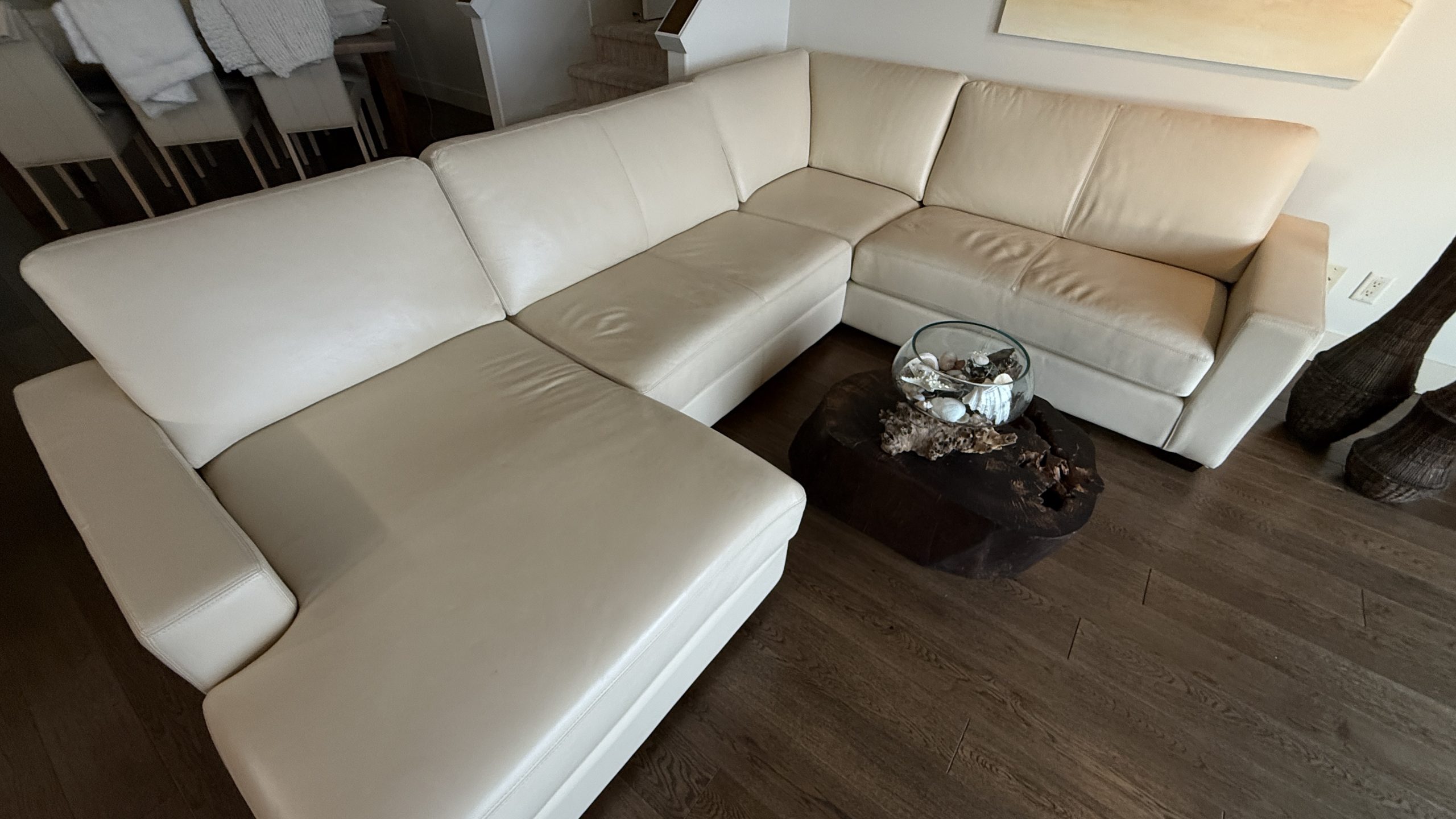
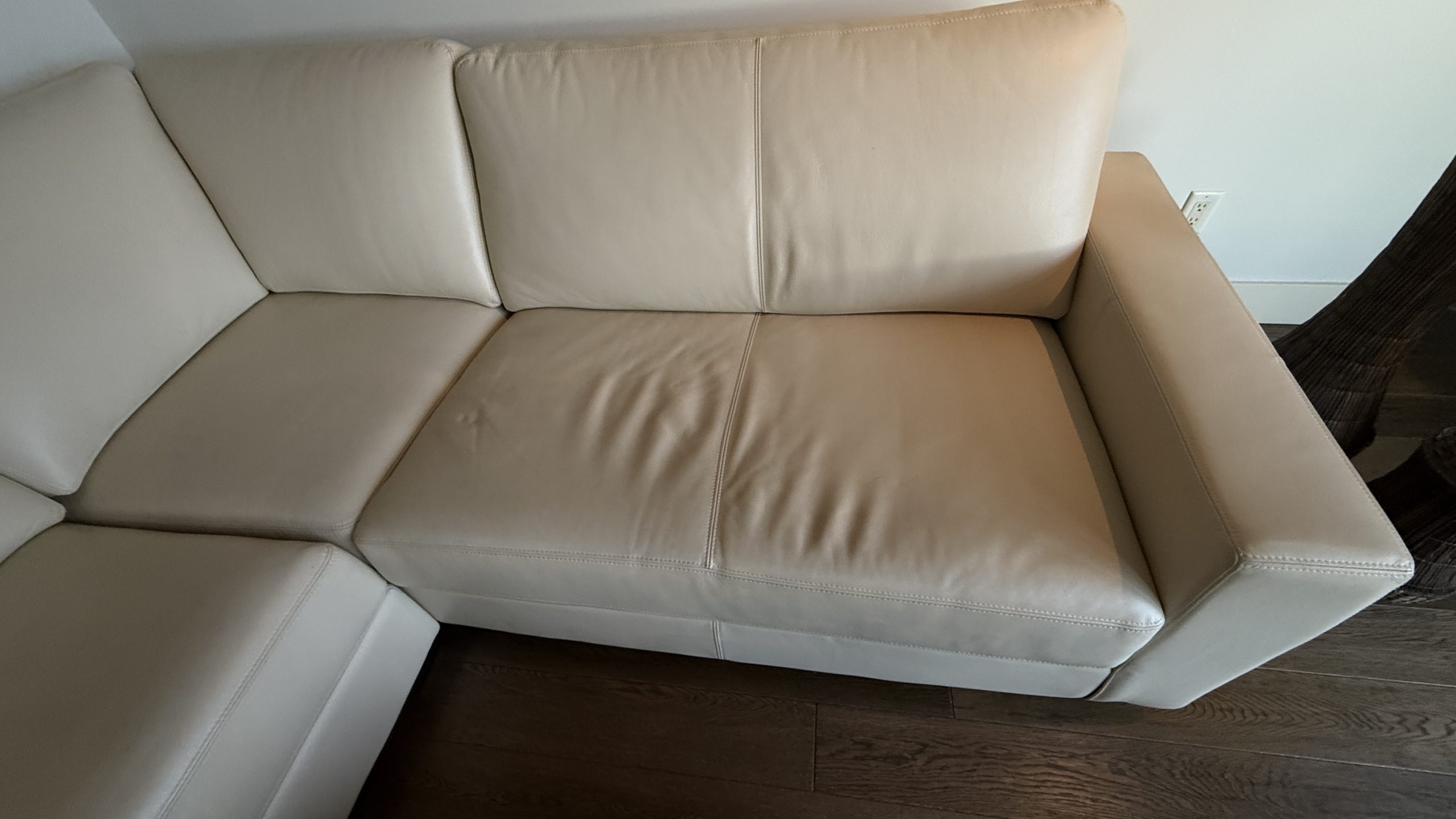
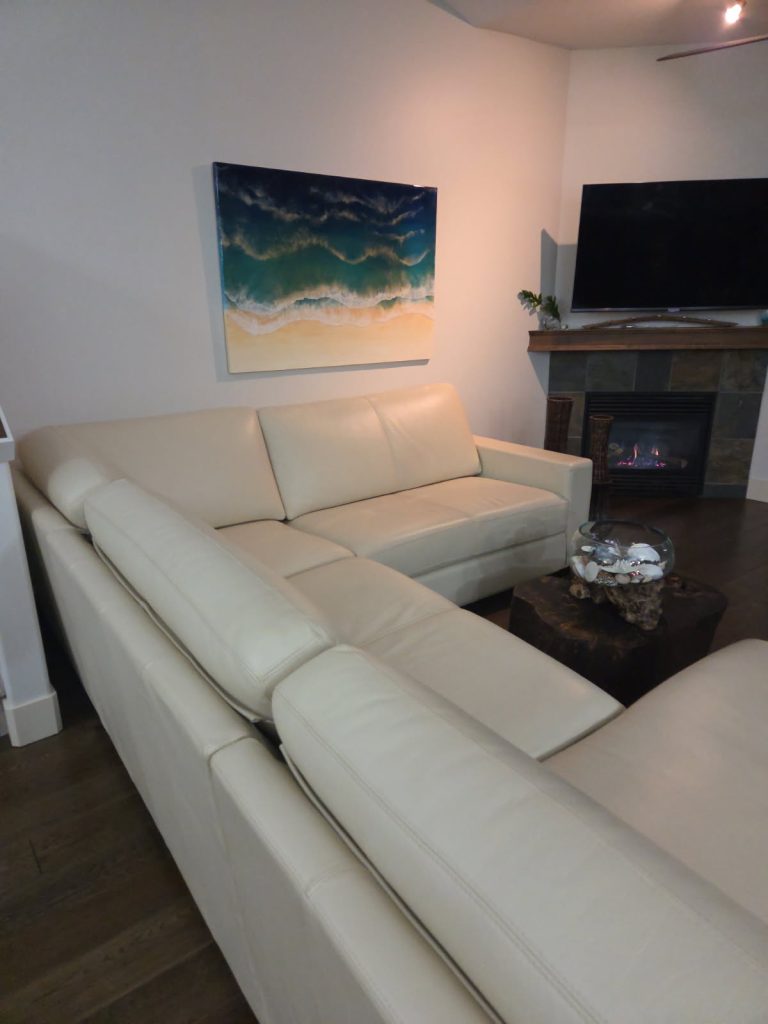
Full-size leather couches and sectionals - the most common leather cleaning request. Seat cushions, armrests, and headrest areas accumulate the most body oil and wear, requiring targeted attention during cleaning.
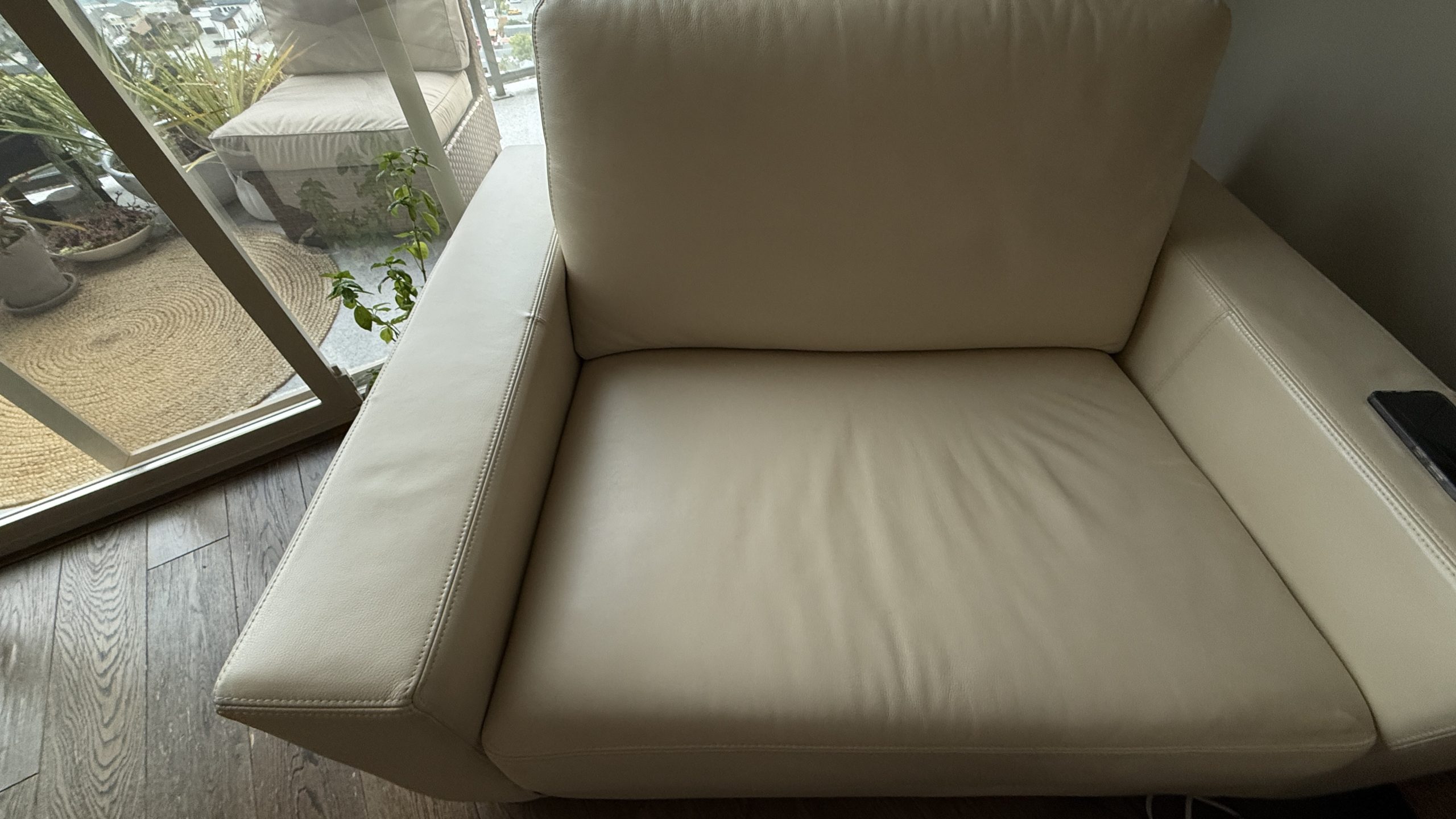
Recliners and single-seat leather chairs, including powered and manual models. We clean around mechanisms and hinges without getting moisture into mechanical components.
Dining chairs with leather seats and backs see frequent food and drink contact. We clean and condition each chair individually, addressing spills, discolouration, and everyday grime from kitchen use.
Executive and desk chairs that see 8+ hours of daily contact. Body oils, perspiration, and hand grime concentrate on armrests, headrests, and seat surfaces - the areas we focus on most.
Ottomans and footrests often serve double duty as seating and as surfaces where feet, shoes, and drinks make contact. We clean all surfaces including the underside of cushions where moisture can be trapped.
Bedroom headboards, entryway benches, and accent leather pieces that accumulate dust, hair oils, and skin contact residue over months of use.
Leather is not upholstery fabric. It does not respond to the same equipment, the same chemicals, or the same techniques that work on a cloth sofa or a polyester cushion. Treating it as though it does is how leather gets damaged – and we see the results of that regularly.
The core issue is that leather is a finished material with a layered structure. From the outside in, you have a topcoat (the clear protective finish), a colour coat (the dye layer), and the hide itself. Each layer has different chemistry and different vulnerabilities. The topcoat resists water and staining but degrades under alkaline cleaners. The colour coat holds the appearance but can be stripped by solvents. The hide provides structure but dries out, stiffens, and cracks when moisture is not replenished.
This is why pH matters more with leather than with any other surface in your home. The products we use sit within a narrow pH range – slightly acidic, matching the natural chemistry of the leather itself. Alkaline cleaners (which includes most all-purpose household products, dish soap, and many upholstery shampoos) attack the topcoat and accelerate its breakdown. Once the topcoat is compromised, the leather underneath absorbs stains and moisture it was previously protected from. We have cleaned leather sofas where a single cleaning with the wrong product caused more visible damage than five years of daily use.
Moisture control is the second critical variable. Leather cannot be soaked, extracted, or steamed the way fabric upholstery can. Water that penetrates past the surface and into the hide causes swelling, warping, and in severe cases, delamination – where the finish layer separates from the hide beneath it. Every step in our process uses controlled moisture: enough to dissolve and lift contaminants from the surface, never enough to migrate through the finish into the hide itself.
The conditioning step is not optional – it is structural maintenance. Leather in its natural state contains oils and waxes that keep it flexible. Over time, heat, dry air, UV exposure, and body contact draw those oils out. Without replacement, the leather dries from the inside out. The first sign is a slight roughness to the touch. Then stiffness. Then fine surface cracks, which widen under continued use. By the time cracking is visible, the damage is already deep and irreversible.
Our conditioner is formulated to be absorbed into the hide rather than sit on the surface. It replaces the natural oils that have been lost, restoring the flexibility that prevents cracking. Applied after cleaning – when the pores of the leather are open and free from surface grime – it penetrates more effectively than any product applied to an uncleaned surface. This is why cleaning and conditioning together produce results that neither step achieves alone.
Different leather types add another layer of complexity. Pigmented (protected) leather – the most common type in household furniture – has a durable topcoat that tolerates more cleaning contact. Semi-aniline leather has a thinner finish and less margin for error. Full aniline leather has virtually no topcoat, absorbs moisture rapidly, and can be permanently marked by a single drop of water in the wrong place. Nubuck and suede are not cleaned with liquid at all. Identifying the leather type before any product is applied is not a precaution – it is the first and most important step in the process.
One factor specific to this region: the Okanagan is hard on leather. Dry summers, centrally heated winters, and strong UV through south-facing windows create a year-round cycle that pulls moisture from the hide faster than coastal or humid climates do. UV alone degrades the topcoat and fades the colour coat underneath. We recommend professional cleaning and conditioning at least once a year for leather furniture in this climate – and twice a year for pieces in direct sunlight or near heat sources. This is not upselling; it is the maintenance schedule that keeps leather furniture performing for 15 to 20 years rather than five to eight.
The short answer: we clean it the way the leather industry recommends, not the way most carpet and upholstery companies do. That means no steam, no hot water extraction, and no all-purpose detergents – all of which can damage leather finishes.
The process is quicker than most people expect. We identify the leather type first (this determines every product choice), vacuum with soft brushes, clean with a leather-specific solution, condition the hide by hand, and buff to a natural sheen. Each step is described in detail in our Work Process section above.
What distinguishes professional leather cleaning from a DIY wipe-down is the conditioning stage. Cleaning alone removes contaminants, but it also removes some of the leather’s own surface oils. Without conditioning immediately afterward, you leave the leather in a slightly more vulnerable state than before you started. That is why the two steps are always done together.
Most stains on leather furniture are removable with the right chemistry and technique. The outcome depends on the stain type, the leather type, and how long the stain has been present.
Body oil darkening, food and drink spills, and dye transfer from denim are among the most common stains we treat, and they respond well to professional cleaning. Ink stains, marker, and pigment-based stains are more variable – fresh ones typically come out fully, while older ones may require multiple treatment cycles.
The most important thing to know is that DIY stain removal on leather carries real risk. Rubbing alcohol, vinegar, baking soda, baby wipes, and all-purpose cleaners can strip the protective finish, spread the stain, or cause discolouration that is worse than the original mark. If you have a fresh stain, blot it gently with a dry cloth and call us before applying anything else.
It depends on how the furniture is used and where it sits in your home. A leather sofa in a low-traffic guest room might go 18 months between cleanings with no issues. A family room couch used daily – especially by kids and pets – benefits from a cleaning and conditioning visit every six months.
The variable most people underestimate is climate. Leather dries out faster in homes with forced-air heating, air conditioning, or significant sun exposure. In the Okanagan, the combination of dry summer heat and centrally heated winters means leather loses moisture year-round, not just seasonally. If the surface feels rougher or stiffer than it used to, that is the leather telling you it is overdue.
As a practical starting point: book once a year, and your technician will tell you during the visit whether your piece would benefit from more frequent conditioning based on what they see.
We clean all common types of finished leather found in household furniture: pigmented (protected) leather, semi-aniline, and full aniline. Each type requires a different approach – from the cleaning solution to the moisture level to the conditioning product – and we adjust our process based on what we identify during inspection.
Bonded leather (a composite material made from leather scraps and polyurethane) has limitations. It can be cleaned but is more fragile than genuine leather and does not respond to conditioning the same way. We will assess any bonded leather piece honestly and let you know what we can realistically achieve.
For suede and nubuck, which require dry-cleaning methods rather than liquid-based cleaning, we will recommend the appropriate service path when you contact us.
Cleaning and conditioning are two separate steps that do different things. Cleaning removes what has accumulated on and in the leather – body oils, dirt, perspiration, spills, and grime that have worked into the surface and finish. Conditioning replaces what the leather has lost – the natural oils and moisture that keep the hide flexible, soft, and resistant to cracking.
A leather sofa that is cleaned but not conditioned will be visibly cleaner but will continue to dry out and stiffen over time. A sofa that is conditioned without being cleaned first will have a fresh conditioner sitting on top of a layer of grime, preventing proper absorption.
Professional cleaning opens the pores of the leather and removes the barrier of surface contamination, allowing the conditioner to absorb properly rather than sit on top of accumulated grime. Skipping either step undermines the other – which is why we always perform both in a single visit.
Properly cleaned and conditioned leather will look like a restored version of itself – not different, just better. Colours become more even as accumulated grime is removed, and the surface regains a soft, natural sheen from conditioning.
In some cases, leather that has darkened significantly from years of body oil buildup may look noticeably lighter after cleaning. This is not a colour change – it is the original colour being revealed. We always test a small area first so you can see and approve the result before we clean the entire piece.