
- Location: Downtown Kelowna, BC
- Item: Two-seater love seat in a high-rise rental suite
- Stain type: Blood + baking soda residue (DIY attempt gone wrong)
- Result: Stain fully removed. Deposit protected.
The Situation
A tenant in a Downtown Kelowna high-rise reached out to us in a bit of a panic. They were approaching move-out and had a blood stain on the landlord’s love seat — the kind of thing that can cost you your entire damage deposit if it isn’t handled properly.
What made the job trickier: before calling us, the client had tried to fix it themselves. Someone had poured a generous amount of baking soda on the stain and rubbed it in hard. The result was a sofa that now had two problems: the blood stain itself, and a deep layer of baking soda packed into the fabric fibres.
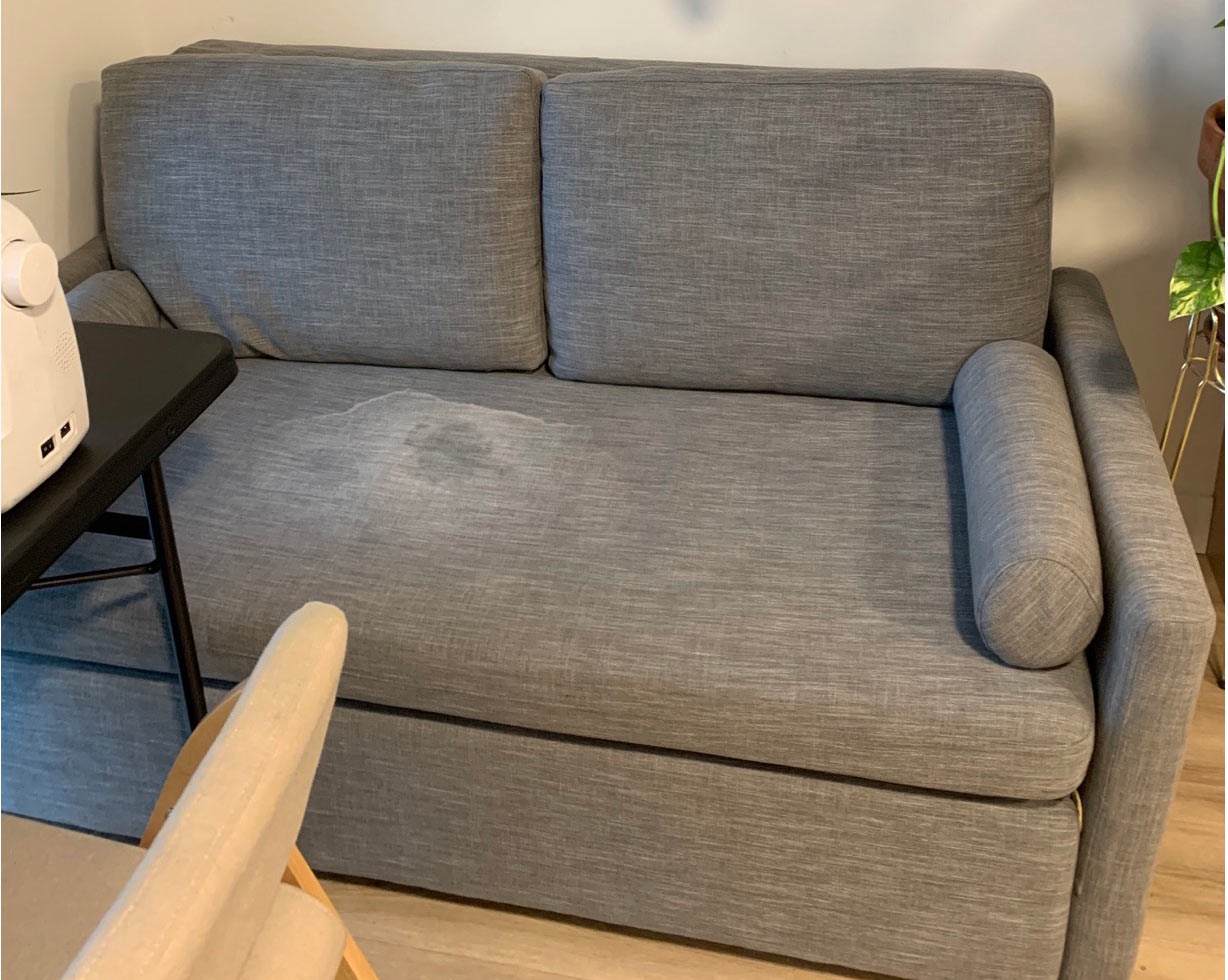
Photo: Love seat with visible blood stain and baking soda residue ground into the upholstery.
Our Process
Working with biological stains like blood requires following the right steps in the right order. Skip one, or do them in the wrong sequence, and you can set the stain permanently.
Step 1 — Dry Extraction First
Before introducing any moisture, we thoroughly vacuumed the entire surface. This is a critical step that’s easy to overlook: you need to pull as much of the dry baking soda out of the fabric as possible before it gets wet. Once soda saturates with water, it becomes far harder to remove.
Step 2 — Blood Pigment Removal
We treated the stain with hydrogen peroxide, carefully blotting with clean white microfibre cloths. The technique here matters — you’re transferring pigment from the fabric onto the cloth, not scrubbing it around. Gentle, deliberate blotting.
BreezeCo Rule: Never use hot water on blood stains. Heat causes the proteins in blood to bond permanently with fabric fibres — it essentially cooks the stain in. We always use cold water.
Step 3 — Professional Hot Water Extraction
We used our Steam E600 extraction machine with cold water and a professional-grade gel solution, running a full extraction pass over the stain zone and then the entire sofa.
Step 4 — Dealing With the Baking Soda
After the first extraction and setting up drying fans, we could see the blood was gone — but white residue had surfaced across the seat. The baking soda had been rubbed in deep enough that it needed to be flushed out completely. We ran two additional rinse extractions with clean water, cycling until the fabric came out clear and uniform.
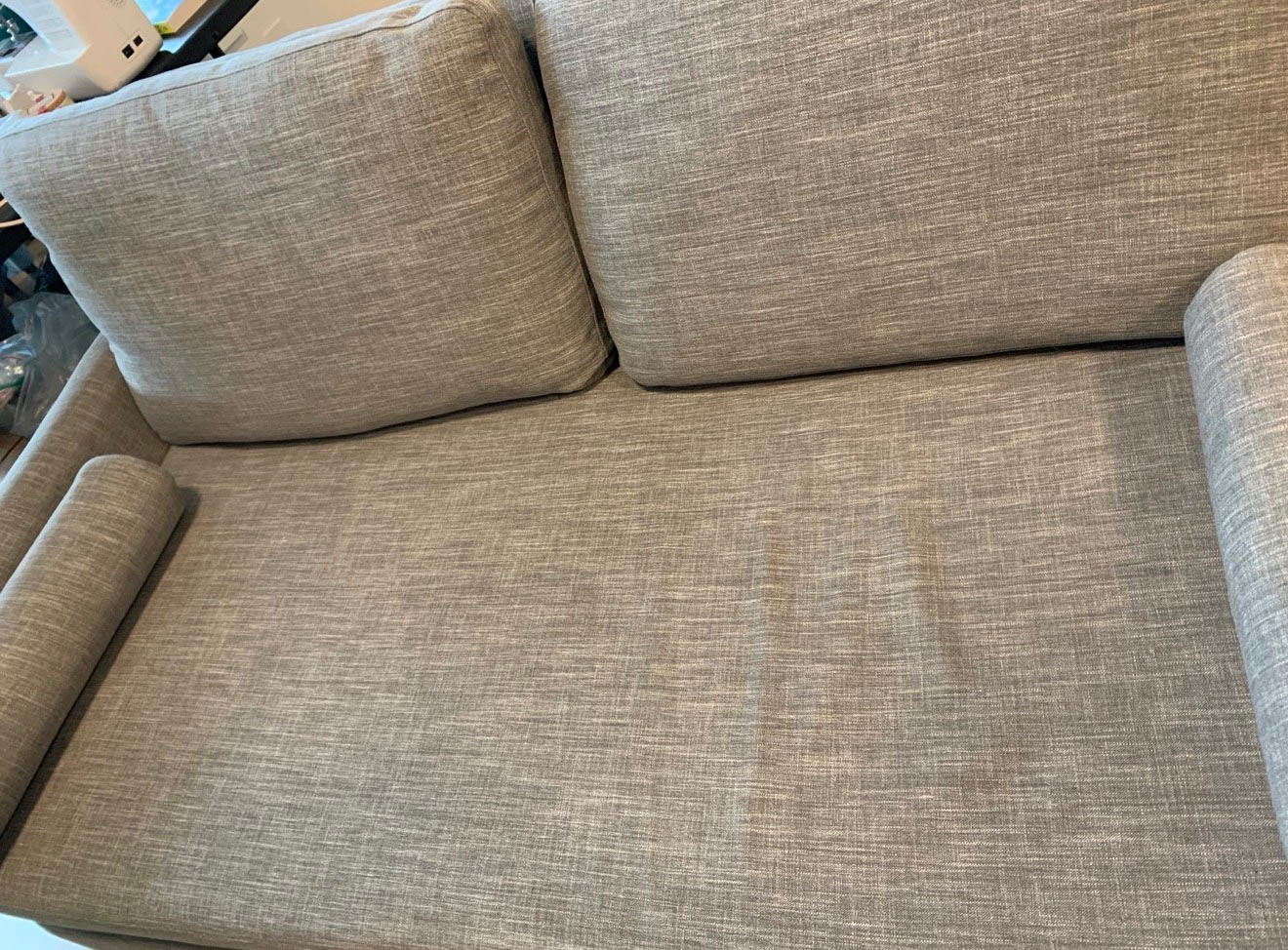
Photo: Clean, dry love seat — no staining, no residue, consistent colour throughout.
The Result
Thanks to our professional drying fans, the sofa was completely dry within 30 minutes. Final inspection confirmed:
- Blood stain: fully removed
- Baking soda residue: fully flushed out
- Fabric appearance: clean and uniform throughout
The client moved out without any issues. Deposit protected.
What This Job Taught Us (And What It Teaches You)
This is one of those cases where a DIY attempt — made with good intentions — created more work than the original problem. Baking soda is a common home remedy, but on upholstery it can backfire badly: it gets packed into the weave and becomes its own removal challenge.
If you’re dealing with a fresh stain on furniture, the safest thing you can do is blot gently with a cold, damp cloth and call a professional before trying anything else. The chemistry of fabric cleaning — especially with biological stains — is specific enough that the wrong first step can make a stain permanent.
Need Upholstery Cleaning in Kelowna?
BreezeCo provides professional sofa and upholstery cleaning across Kelowna and the surrounding area. Whether it’s a recent stain or something that’s been there for a while, we’ll assess it honestly and tell you what we can do.